Filter by
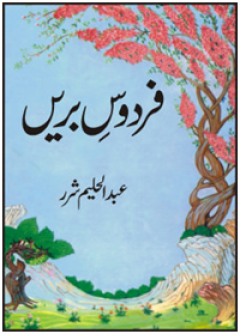
Firdaus e Bareen / فردوس بریں
The book was first published in 1899. The story of Husain and Zammarrud fallen in the grip of the Assassins take us back to the last days of Hasan Bin Sabah's merciless followers, at the end of which the sect's stronghold, the famous fort of Alamoot, was destroyed by the even more merciless Mongol hordes. Sharar writes famously in the style of a Walter Scott novel, the novel itself being a new …
- Edition
- 46th
- ISBN/ISSN
- 9789693501308
- Collation
- 165
- Series Title
- -
- Call Number
- 891.4393

Tauba tun Nasooh / توبۃ النصوح
This work has been selected by scholars as being culturally important, and is part of the knowledge base of civilization as we know it. This work was reproduced from the original artifact, and remains as true to the original work as possible. Therefore, you will see the original copyright references, library stamps (as most of these works have been housed in our most important libraries around …
- Edition
- 45th
- ISBN/ISSN
- B0DLT9KPMQ
- Collation
- 256
- Series Title
- -
- Call Number
- 891.4393

Shaheen / شاہین
Sharīf Husain (Urdu: شریف حسین), who used the pseudonym Nasīm Hijāzī (Urdu: نسیم حجازی, commonly transliterated as Naseem Hijazi, or Nasim Hijazi) was an Urdu writer famous for writing Islamic Historical fiction. Born in British India he settled in Lahore, Pakistan after independence. His novels based on Islamic history are considered one of a kind in Urdu literature. Shar…
- Edition
- 44th
- ISBN/ISSN
- B0DN1N1HY1
- Collation
- 376
- Series Title
- -
- Call Number
- 891.4393

Jannat Kay Pattay / جنت کے پتے
The life of LLB (Hons) student Haya Suleman took an interesting turn when she received scholarship to study a five-month semester at a university in Turkey, but the circumstances became grave when someone leaked a private video of her made at a party on the internet. To keep the video away from the eyes of the members of her traditional family and to avoid any complications, she had to contact …
- Edition
- 43rd
- ISBN/ISSN
- B0DLT6XP41
- Collation
- 544
- Series Title
- -
- Call Number
- 891.4393

Ibn ul Waqt / ابن الوقت
First published January 1, 1888 Novel on the Mutiny, relationship of a Muslim nobleman and an English officer. on cultural contact, an exploration of eastern and western values. Trans. of Ibn-ul-Vaqt. 1st pub. 1888 in Urdu, now translated for the first time.
- Edition
- 42nd
- ISBN/ISSN
- -
- Collation
- 282
- Series Title
- -
- Call Number
- 891.4393
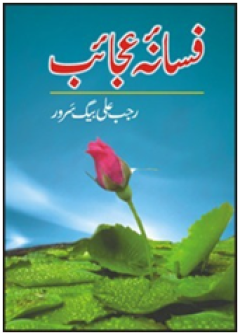
Fasana e Ajaib / فسانہ عجائب
248 pages, Hardcover First published January 1, 1867 Fasana e Ajaib has special place in our fiction literature. This is kind of literature which is the link between dastaan and novel. It was written almost 175 years ago but still found attractive and appreciated by critics. Although the language used is obsolete even then reader can find it interesting. There is brief vocabulary given at …
- Edition
- 41st
- ISBN/ISSN
- 9789693-50-7300
- Collation
- 248
- Series Title
- -
- Call Number
- 891.4393
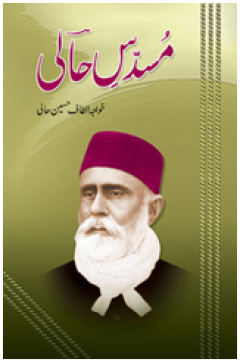
مسدّس حالی [Musaddas-e-Hali](( مسدّس مد و جزر اسلام)
120 pages First published January 1, 1889 This is the first critical presentation in English of Hali's epic poem, The Musaddas on "The Ebb and Flow of Islam"--a landmark in the development of Urdu poetry as of modern Indian literature.
- Edition
- 40th
- ISBN/ISSN
- -
- Collation
- 160
- Series Title
- -
- Call Number
- 891.4391
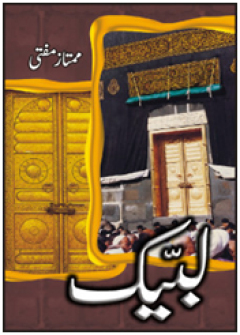
Labbaik / لبیک
320 pages, Hardcover ممتاز مفتی نے 1968ء میں قدرت اللہ شہاب کے ہمراہ حج بیت اللہ کی سعادت حاصل کی۔ اس سفر کے تقریباً چھ سال بعد 1975ء میں ان کے حج کے سفر کی روداد ایک رپوتاژ کی شکل میں التحریر، لاہور کے زیر اہتمام شائع ہوئی۔ اس پہلے یہ …
- Edition
- 39th
- ISBN/ISSN
- 9789693-50-2343
- Collation
- 320
- Series Title
- -
- Call Number
- 891.4393
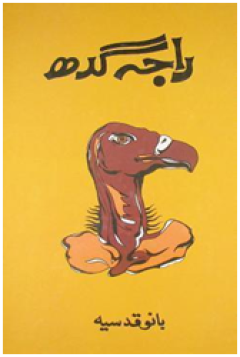
Raja Gidh / راجه گدھ
Raja Gidh (Urdu: راجه گدھ) by Bano Qudsia is one of the most widely read and acclaimed Urdu novels. Gidh is the Urdu word for a vulture and Raja is a Hindi synonym for king. The name anticipates the kingdom of vultures. In fact, parallel to the main plot of the novel, an allegorical story of such a kingdom is narrated. The metaphor of the vulture as an animal feeding mostly on the carcas…
- Edition
- 38th
- ISBN/ISSN
- 9789693505146
- Collation
- 564
- Series Title
- -
- Call Number
- 891.4393

Nuskha ha-e Wafa / نسخہ ہائے وفا
Faiz Ahmad Faiz [فيض ١حمد فيض] was born on February 13, 1911, in Sialkot, British India, which is now part of Pakistan. He had a privileged childhood as the son of wealthy landowners Sultan Fatima and Sultan Muhammad Khan, who passed away in 1913, shortly after his birth. His father was a prominent lawyer and a member of an elite literary circle which included Allama Iqbal, the nation…
- Edition
- 37th
- ISBN/ISSN
- B0DN27SDFL
- Collation
- 320
- Series Title
- -
- Call Number
- 891.4391
 Computer Science, Information & General Works
  Philosophy & Psychology
  Religion
  Social Sciences
  Language
  Pure Science
  Applied Sciences
  Art & Recreation
  Literature
  History & Geography